Showing posts with label automobile facts. Show all posts
What was the strangest car trip in history?
For those who think that the cars of yesterday were not as reliable as the ones produced today, please read this:
In 1930, two men left New York City and drove all the way to Los Angeles, almost 3,600 miles away, in a Ford Model A Roadster. What's curious is that they completed the city-to-city trip without turning off the car once!
Then they turned around and drove all the way back to New York, again without turning off the car once! The trip took them 42 days.
And to make the trip even stranger: The two men completed the journey from coast to coast by reversing their car all the way!
.
What is fuel injection?
![]() |
| Fuel injector |
The typical fuel injection engine has a separate fuel injection mechanism for each cylinder. The mechanism consists of a high-pressure pump, a nozzle, and a valve fitted into the wall of the cylinder. During the compression stroke the pump forces a small amount of fuel through the nozzle into the cylinder, where it ignites and burns. The nozzle sprays the fuel evenly through the air in the cylinder. The valve allows the fuel to enter but prevents the compressed fuel-air mixture from backing up into the fuel system.
When a fuel injection system is used in a gasoline engine, it may completely replace the conventional carburetor. Alternatively, the fuel may be injected into the stream of air entering the cylinders, in a device called the injection carburetor. The principal advantage of a fuel injection system over the conventional carburetor and intake manifold system in a spark ignition engine is that it provides a more even distribution of fuel to the cylinders.
Reaction engines, such as the turbojet engine, also use the fuel injection technique. In such engines the fuel is injected into the combustion chamber, where it burns continuously.
What is a speedometer?
Scientists and engineers have mastered the measurement of distance - from fractions of a millimetre to thousands of kilometres. And they can also measure time with the same degree of accuracy. A combination of the two gives us a further important measurement - speed. Speed is the distance travelled by an object in a certain time. Measurements of speed are given by devices named according to the vehicle in which they are found. A ship has a log, an aeroplane has an airspeed indicator. And the most common of all is the speedometer, which is found in motor cars and trains.
An important part of a speedometer is the magnet. A magnet's force is spread out around it in the form of a magnetic field. When a magnet is rotated, its field will rotate with it. The magnet in the speedometer begins to rotate as soon as the vehicle starts to move.
The magnet is driven by a flexible cable which is connected to the front axle of the vehicle. The higher the speed of the vehicle, the higher is the speed of rotation of the magnet. The magnet rotates inside an aluminium ring. The rotating magnetic field brings about ('induces') electric currents within - the aluminium metal. These in turn give rise to a second magnetic field. This magnetic field repels the one produced by the magnet itself.
This force on the ring is called the torque. The faster the magnet turns the higher is the torque. The ring is not free to rotate, but it is able to swing a little. It is held back by a spiral spring. The amount the ring can swing depends on the strength of the torque.
Attached to the ring is a pointer which shows the speed of the vehicle on a suitable scale.
The usual speedometer has a round dial, clearly marked with numbers in tens. Another type has a revolving drum, to which the scale is attached. When the speed increases, the drum turns, and the speed change is shown on the scale through a narrow gap in a panel fixed in front of the scale. The scale may take the form of a coloured band.
Usually, a speedometer is combined with an odometer, which records the distance travelled. The odometer is driven by the same drive shaft or cable that drives the magnet. The movement of the speedometer shaft is transmitted through a system of gears to the distance recorder. This recorder actually counts the number of revolutions made by the vehicle's front wheels. Because a certain number of revolutions are equal to a certain distance travelled by the vehicle, the odometer can be made to give a direct reading of the distance covered.
When the disc that counts the 'units' has made one revolution, the counting disc for the 'tens' is moved on one place. When the 'tens' disc has made one revolution, it then moves the 'hundreds' disc on one place. This process is repeated up to the 'ten thousands' disc.
Car improvements
Since the 19th century the automobile it developed quite fast. Between World Wars I and II and ever since, improvements have continued to come along. Let's take a quick look at some of these improvements and when they happened. In 1906 front bumpers were added, but it was not until 1915 that tops and windshields became standard equipment on all American cars. A year later rear-view mirrors, stoplights, and an early form of windshield wiper came along. In 1923, four-wheel brakes were introduced, and 3 years later the first automobile heaters were added. By 1927, hydraulic brakes had replaced mechanical brakes, and in 1929 the first car radios were introduced along with dimmers for headlights. In 1937 the gearshift lever was moved to the steering column. That same year saw the introduction of the first automatic transmission. After the war ended, power steering was invented and wrap-around windshields were added for better vision. In the early 1960's seat belts were introduced for safety.
Some Automobile Facts
In 1885 a new type of vehicle appeared on the roads in Stuttgart, Germany. It looked much like some of the small steam carriages seen in other towns. But it differed in one important respect - its engine used gasoline as fuel. It was the ancestor of the modern automobile. Its inventor was named Karl Benz.
In less than a century the automobile has developed into our most important form of transport, which greatly affects the way we live. Something like 300 million automobiles now travel on the world's roads. The latest ones are sleek vehicles, carefully streamlined so that they slip through the air easily. Some are designed for speed, being able to travel over 124 mph. Others are designed for economy, being able to travel over 45 miles on a US galon of gasoline. Many are built with the aid of robots.
Automobiles are a very comfortable and convenient form of transport, but they have their disadvantages. They cause accidents; they burn a fuel obtained from oil, which will soon be in short supply, and they are a major source of pollution. For these reasons automobile manufacturers are continually redesigning their autos to make them safer, use less fuel, and cause less pollution. They are also experimenting with new kinds of engines that run on steam, hot air, and electricity. These should cause no pollution at all.
In less than a century the automobile has developed into our most important form of transport, which greatly affects the way we live. Something like 300 million automobiles now travel on the world's roads. The latest ones are sleek vehicles, carefully streamlined so that they slip through the air easily. Some are designed for speed, being able to travel over 124 mph. Others are designed for economy, being able to travel over 45 miles on a US galon of gasoline. Many are built with the aid of robots.
Automobiles are a very comfortable and convenient form of transport, but they have their disadvantages. They cause accidents; they burn a fuel obtained from oil, which will soon be in short supply, and they are a major source of pollution. For these reasons automobile manufacturers are continually redesigning their autos to make them safer, use less fuel, and cause less pollution. They are also experimenting with new kinds of engines that run on steam, hot air, and electricity. These should cause no pollution at all.
Electric car facts
- Electric cars enjoyed popularity between the mid-19th century and early 20th century.
- Electric cars currently enjoy relative popularity in countries around the world
- Today the electric car certainly does have its limitations - they are generally more expensive than gasoline cars, the 'efficiency' offered by the existing batteries are fairly low (approximately 125-150 kms before they have to be charged again), and re-charging facilities are not readily available.
- The Tesla Roadster gets 394 kilometers (245 miles) per charge.
- In 2010 the US government estimated that a battery with a 100 miles (160 km) range would cost about US$33,000.
- Conventional gasoline engines effectively use only fifteen percent of the fuel energy content to move the vehicle or to power accessories, and diesel engines can reach on-board efficiencies of twenty percent, while electric drive vehicles have on-board efficiency of around eighty percent.
- On April 21, 2010, Sanyo announced that it performed a 345.2 miles (555.6 kilometers) travel from Tokyo to Osaka on a single charge with an electric Li-Ion batteries powered Daihatsu Mira.
- A vehicle with an internal combustion engine that gets 25 miles per gallon will require $1,800 in gasoline (at $3 per gallon) over a year of driving (24,000 km or 15,000 mi), which works out to $0.12 per mile. At $0.11 per kwh, an electric car costs $0.026 per mile to operate, or $396 for 15,000 miles—a savings of about $1,400 (per year).
Some facts about Dale Eanrhardt, Jr.
- Dale Earnhardt, Jr. was born on October 10, 1974.
- Dale Earnhardt, Jr. is a 3rd-generation driver.
- Dale is the son of NASCAR Hall of Famer Dale Earnhardt, Sr., and the grandson of both the late NASCAR driver Ralph Earnhardt and Robert Gee, a car builder.
- Dale's nicknames include Little E, Junior, and Junebug.
- Dale Earnhardt Jr. would love to race until he is forty-five years old.
- Dale's favorite drivers: Bobby Labonte and Dale Jarrett.
- Dale's first NASCAR race was in 1999.
- Dale Earnhardt Jr. is 6 feet (1.83 m) tall and weighs 175 lbs (80 kg).
- In 2005, Dale Earnhardt Jr. beat out Jeff Gordon to win NASCAR's Sexiest Driver.
- Dale Earnhardt Jr. has appeared in commercials for NAPA, Budweiser, Domino's Pizza and Rent-A-Car.
- Dale's very first race car was a 1978 Monte Carlo.
- Dale's favorite track is Daytona.
- Dale Earnhardt, Jr. went to college for a degree in automotives.
Cadillac automobile facts
- Cadillac is a luxury vehicle marque owned by General Motors.
- The Cadillac automobile was named after the Seventeenth-century French explorer Antoine Laumet de la Mothe, Sieur de Cadillac, who founded Detroit in 1701.
- The Cadillac car was born in 1902.
- Cadillac was purchased by the General Motors (GM) company in 1909.
- Cadillac cars are sold in over fifty countries, but mainly in North America.
- Cadillac is currently the second oldest American automobile manufacturer behind Buick and among the oldest automobile brands in the world.
- Cadillac was the first production automobile to use, amongst others, a distributor, power steering, and a synchromesh transmission.
Facts about Car Accidents
- Drivers involved in auto accidents are usually distracted, tired, or driving under the influence.
- The first person to be killed in an auto accident in the United States was Henry H. Bliss, a 68-year-old real estate broker. On September 14, 1899, in New York City, Mr. Bliss stepped from a streetcar, turned to assist a woman passenger, and was hit by a cab.
- Survey's suggest that male drivers cause twice as many accidents as female drivers.
- There is a town in Maryland called Accident. It sits on a major state highway linking western Maryland with the rest of the state. On the approach to the town is a road sign that doubles as a warning and is always true, no matter what the traffic condition. The sign says: ACCIDENT AHEAD
- Different types of car accidents include head on collisions, rear enders, rollovers, suicides, side impacts and more. The most deadly of these accidents are the vehicle rollovers.
- The national auto accident facts show that approximately 40% of fatalities are related to drinking and driving, 30% to speeding, and about 30% from a vehicle leaving the roadway.
- Most car accidents actually occur within 5 kilometres from home. There is a common misconception that car accidents occur while travelling to a vacation destination, but this is not the case.
- Your chances of getting into a car crash while talking on a cellphone increases by 400%.
- While nearly 40,000 people die in auto accidents each year, auto accident facts show that this number has been steadily declining over the last 30 years.
- Each year, approximately 300,000 teens are injured in a car crash. In the United States alone 5,000 teens die each year. On average that equals to 14 teens a day.
- Over the course of the last 5 years, more than one-quarter of Americans has been involved in an auto accident.
Ferrari 550 facts
- The Ferrari 550 Maranello and 550 Barchetta are 2-seat grand tourers built by Ferrari.
- The 550 Maranello was Ferrari's version of the 12-cylinder Berlinetta, with an engine in front and a 21st century style and performance.
- The model number refers to total engine displacement (5.5 litres) and the model name of Maranello refers to the town where the Ferrari headquarters are located.
- The 550 Maranello had a luxurious feel with its interior and roominess.
- The 550 Maranello can accelerate to 60 mph (97 km/h) in 4.2 seconds and can reach 161 kilometres per hour (100 mph) in 9.6 seconds.
- The 550 line was replaced by the Modificata 575 M Maranello in 2002.
- The 5.5 L V12 engine used in the 550 Maranello won the "over 4 liter" class of the International Engine of the Year award for the years 2000 and 2001.
- The engine is a naturally aspirated V12 with 4 valves per cylinder, and dual overhead cams.
- Ferrari introduced a convertible version of the 550 at the Paris Motor Show in 2000. This Barchetta was a true roadster with no real convertible top provided.
- A total of 448 Barchettas were produced, four more than initially planned due to concerns of superstition in the Japanese market.
- The 550 based Ferrari Rossa was introduced at the 2000 Turin Motor Show to celebrate the 70th anniversary of Pininfarina.
Ferrari Berlinetta Boxer
![]() |
| Berlinetta Boxer |
- A Ferrari Berlinetta Boxer is one of a series of cars produced by Ferrari in Italy between 1973 and 1984
- No BB was ever originally sold in North America, as Enzo did not believe it to be worth the cost of federalizing. However, third parties made conversions, and quite a few of them are now in the United States.
- Ferrari entered the mid-engined 12-cylinder fray with the Berlinetta Boxer in 1973.
- The first "Boxer" was the 365 GT4 BB shown at the 1971 Turin Motor Show.
- Designed to answer rival the Lamborghini Miura, the Berlinetta was finally released for sale in 1973 at the Paris Motor Show.
- 387 were built, with 88 in right-hand drive (of which 58 for the UK market), making it the rarest of all Berlinetta Boxers.
- The engine on the Boxer shared its internal dimensions with the V12 from the Daytona, but was spread out to 180° as on Ferrari's 1970 Formula One car and was mounted above a five-speed manual transmission.
- 929 BB 512 models were produced.
- The Bosch K-Jetronic CIS fuel injected BB 512i introduced in 1981 was the last of the series.
- 1,007 BB 512i models were produced.
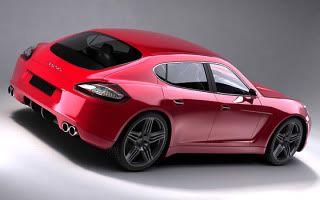
The Porsche Panamera
INTERESTING FACTS
- The Porsche Panamera is a four-door, four-seat luxury saloon/sedan, which was launched in 2009.
- The Panamera's name is derived, like the Porsche Carrera line, from the Carrera Panamericana race.
- In November 2008, the first official image of the Panamera was leaked.
- The Porsche Panamera production model was unveiled at the 13th Auto Shanghai International Automobile Show in Shanghai, China on April 2009.
- The Porsche Panamera and Panamera S are marketed as a direct competitor to full-size luxury cars such as the BMW 7 Series and Mercedes-Benz S-Class.
- The high performance Panamera Turbo competes in the ultra-luxury segment alongside "exotics" such as the Bentley Continental Flying Spur, Aston Martin Rapide, and Maserati Quattroporte.
- Like the Porsche Cayenne SUV, the Panamera upset many Porsche enthusiasts, since it was seen as an attempt to broaden Porsche's appeal beyond that of hardcore fans.
- In 2008, Porsche AG announced the development of a parallel hybrid system for the Panamera.
- Production began in April 2009, one month after its debut in the Shanghai Motor Show in China. Porsche will keep production rate at around 20,000 cars per year.
- The Panamera comes with the Porsche Traction Management (PTM), which is Porsche's name for its fully-controlled, four-wheel drive system.
- The 2012 Porsche Panamera Hybrid will use the same powertrain as the one on the Cayenne S Hybrid.
- On 27 April 2010, Porsche announced the recall of all 2010 Panameras due to potentially faulty seatbelt mounts.
The Ferrari 360
![]() |
| Ferrari 360 Modena |
- The Ferrari 360 is a mid-engine midsize two-seater sports car produced from late 1999 until 2005.
- The best-selling Ferrari models ever are the 2000-’05 360 Modena/360 Spider, with 17,500 sold. However, the best-selling single Ferrari model for which a precise figure is available is the 1986-’89 328GTS, at 6068.
- The 360 replaced the Ferrari F355 and was itself replaced by the fairly similar Ferrari F430.
- Nine versions of the basic 360 were produced, of which six were road models: 360 Modena, a fixed roof two-door luxury sports coupe, available with a 6-speed manual or F1 electrohydraulic manual; 360 Spider, a convertible variant of the Modena; Challenge Stradale, an F1 electrohydraulic manual 360 Challenge inspired variant of a 360 Modena; 360 Modena F1, and the 360 Spider F1
- The first model of the 360 to ship was the 360 Modena, named after the town of Modena, the birthplace of Enzo Ferrari.
- Ferrari currently produced about 3,400 cars a year including 360 Modena, 456 M GT, and 550 Maranello.
- The Modena was followed by the 360 Spider, Ferrari's 20th road-going convertible.
- The 360 Spider was regarded a classic even when launched in 2000. Designer Pininfarinas lines are by many regarded as timelessly beautiful and yet sportingly aggressive.
- The Challenge was a track only car. It was a non-road legal variant of the Modena that shed 120 kg (265 lb) of weight by use of carbon fibre and stripping out of all of the road car's luxuries such as leather interior coverings, electric windows and mirrors.
The Lamborghini Murciélago facts
![]() |
| Murciélago |
- The Lamborghini Murciélago is a high-performance sports car produced by Italian automaker Lamborghini.
- The Murciélago was introduced as a coupé in 2001 for the 2002 model year, succeeding the famed Diablo supercar in Lamborghini's lineup.
- The Murciélago was the automaker's first new design in eleven years, as well as the first under the ownership of German automaker VW.
- Murciélago is the Spanish name for the bat.
- In a continuation of Lamborghini's tradition of giving its cars names from the world of bullfighting, the Murciélago was named for a fighting bull that survived 28 sword strokes in an 1879 fight against Rafael "El Lagartijo" Molina Sanchez, at the Coso de los califas bullring in Córdoba, Spain.
- First-generation Murciélagos, produced between 2001 and 2006, were powered by a 6.2-litre V12 which traces its roots back to the company's beginnings in the 1960s.
- The Lamborghini Murciélago features scissor doors.
- The fastest Lamborghini is the Le Mans version of the Murcielago R-GT model. It has been reported to have a top speed of 370 km/h.
- The Murciélago Roadster was introduced in 2004 as a 2005 model.
- In 2003, Lamborghini celebrated its 40th anniversary by releasing an Anniversary Edition of the Murciélago.
- The fastest street model from Lamborghini is the Murcielago LP640 with an estimated top speed of 340 km/h.
Facts about the Porsche 911 GT3
- The Porsche 911 GT3 was introduced in 1999 as a high performance version of the first water-cooled version of the Porsche 911, the 996.
- The racing versions of the GT3 have won several major 24h races outright, and mainly dominated their class at Le Mans.
- The engine of the GT3 is actually based on the original air-cooled 911's versatile, true dry-sump crankcase, with an external oil tank. The original version of the GT3 had 360 PS (265 kW; 355 hp), compared to the 300 PS (221 kW; 296 hp) of the regular 996.
- The Porsche 911 GTI won the 24 Hours of Le Mans in 1998 and Porsche chose not to enter the '99 Le Mans due to not having a factory vehicle that was good enough to defend the overall win against the competition by major automakers.
- The Porsche 911 GT3 continued the 25 year tradition of low-weight RS models that was ended with the 993 RS.
- The new Porsche 997 GT3 R Hybrid made its debut at the 2010 Geneva Motor Show.
- The hybrid technology featured in the car was developed by the Williams Formula One Team and is based on their F1 Kinetic Energy Recovery Systems.
The Ferrari Testarossa "redhead"
Interesting facts
- The word Testarossa is Italian for "redhead".
- The Ferrari Testarossa is a 12-cylinder mid-engine sports car manufactured by Ferrari, which went into production in 1984 as the successor to the Ferrari Berlinetta Boxer.
- In 1995, the F512 M retailed for $220,000.
- The Ferrari Testarossa can accelerate from 0–100 kilometres per hour (62 mph) in 5.8 seconds.
- The Testarossa should not be confused with the Ferrari TR "Testa Rossa" of the late 1950s and early 1960s, which were GT sports cars that ran in the World Sportscar Championship, including the 24 Hours of Le Mans.
- Ferrari and Pininfarina regularly use descriptive terms related to a female's body when describing the style of their automobiles.
- The Testarossa has 16-inch (406 mm) wheels with a width of 8-inch (200 mm) at the front and 10-inch (250 mm) at the rear for both U.S. and International versions.
- The Testarossa Spider, serial number 62897, is the sole official convertible variant of the Testarossa commissioned by Ferrari and designed by Pininfarina to be built.
- Designed by Luigi Colani in 1989, the Testa d'Oro was designed to break land speed records. It was based on a Testarossa with a twin-turbo on its flat-12, outputting 750 hp (559 kW) at 400 rpm and 900 N·m (660 lb·ft) at 5000 rpm.
![]() |
| Testarossa |
10 interesting facts about The Ford Flex
- The Ford Flex is a full-size crossover manufactured by Ford Motor Company.
- The Ford Flex is produced on the same assembly line as the Edge and Lincoln MKX crossovers at the Oakville Assembly Plant in Oakville, Ontario, where the first Flex was driven off the line at the beginning of June 2008
- The production vehicle made its debut at the 2007 New York International Auto Show.
- The 2009 Ford Flex includes seven-passenger seating, including adjustable and removable footrests for second-row passengers.
- The Ford Flex is powered by two different V-6 engines.
- The Flex comes with Ford's AdvanceTrac traction control system with roll stability control which helps the driver maintain control on low traction surfaces and during emergency maneuvers.
- Standard safety features on the 2009 Ford Flex include antilock brakes, stability control, front-seat side airbags and full-length side curtain airbags.
- As part of the 'electrifying the night' campaign, Ford partnered with Esquire Magazine in the magazine's first issue with a cover using E Ink technology.
- The Flex's 3.5 L (213 cu in) V6 engine produces 262 hp (195 kW) and 248 lb·ft (336 N·m), and is paired with the 6-speed 6F automatic transmission.
- Offered on the Flex is Ford's Active Park Assist system, which finds and measures a suitable parking space, then operates the steering wheel to accomplish the parallel parking task.
Facts about The Ford Fusion (Europe)
- Ford Fusion is a name used on two different models of cars from the Ford Motor Company: Ford Fusion (Europe) and Ford Fusion (Americas) / Ford Fusion Hybrid.
- The European Ford Fusion is a stretched version of the Ford Fiesta supermini.
- The Fusion is produced by Ford of Europe since 2002 and sold in Europe and India.
- Its extra height compared with the Fiesta is due to both roof racks, increased ground clearance and taller roof, which makes it roomier and more comfortable for taller drivers than regular superminis, drawing it closer to mini MPVs and mini SUVs.
- A no-frills XUV version of the Fusion called the Ford EcoSport is produced in Brazil and sold in many Latin American countries.
Facts about The Ford Taurus X
- The Ford Taurus X is a 6- or 7-passenger full-size crossover SUV that was produced by Ford Motor Company in the United States.
- The design of the Taurus X closely resembled that of its former sibling, the Ford Edge.
- The vehicle used the Ford D3 platform, which it shared with the Ford Five Hundred, Mercury Montego, and various Volvos including the XC90.
- The Freestyle, along with the Five Hundred, Mercury Montego, and the Ford Escape Hybrid, were the first American Ford vehicles to use a continuously variable transmission (CVT).
- The Freestyle was nominated for the North American Truck of the Year award for 2005 (second behind Escape Hybrid).
The Ford Territory facts
- The Ford Territory is a crossover SUV built by Ford Australia.
- The Ford Territory is based on the EA169 platform of the Ford BA Falcon.
- The Territory resembles the Ford Taurus X sold in North America.
- It won the 2004 Wheels Car of the Year award, the reviewers praising car-like handling and practicality as reasons for its win.
- South African sales for the Territory began in 2005. Exports to Thailand began in 2006, with the Thai model being offered only in AWD Ghia trim.
- The Ford Territory was the first Australian-built vehicle to be fitted with an electronic stability control system.
- In 2011 Ford will introduce a new model with the 2.7L diesel V6 that is shared with Land Rover, Peugeot and Citroen. It will initially use the ZF six-speed auto but eventually adopt the Powershift transmission to reduce fuel consumption. The engine will emit up to 25 percent less CO2 compared to the current 4.0L inline-six.
- The Territory is used in varying roles by several emergency services in Australia. Victoria Police use the Territory as a patrol car as well as specialist departments such as the Major Collision Investigation Unit.
- The Australian Federal Police and NSW Police both use the Territory Turbo as a VIP protection and escort vehicle.
Subscribe to:
Posts (Atom)