Showing posts with label inventors. Show all posts
Where did the first drive-in open?
Who invented the drive-in theater?
In 1932, a man named Richard Hollingshead placed a screen in front of his garage in Riverton, New Jersey, and sat in his car to watch a movie.
He did so so that he could become the first person in a car to watch a movie, and thus obtain a patent on the idea, which would prevent anyone else from using it.
Hollingshead created the first drive-in shortly after in a vacant lot in Camden, New Jersey. The lot had room for 400 vehicles. But then the government declared that Hollingshead did not have the patent on the idea, and many other people started creating their own drive-in movie theaters.
In 1948, there were 820 movie theaters in the United States, and in its heyday during the 1960s, the total had increased to more than 4,000.
.
Was Benjamin Franklin really a great inventor?
Many legends are presented about the facts of famous historical figures, and these stories are often not true.
For example, the story of George Washington cutting the cherry tree or throwing a silver dollar across the Potomac River are both legends, and the events they describe probably never happened.
But most of the legends about Benjamin Franklin are true. For example, it is true that Franklin proved that lightning is pure electricity, and that he invented the lightning rod. Franklin also invented bifocal eyeglasses, in which each lens contains one area for seeing things nearby and another area for seeing things far away.
Other inventions include a type of iron stove, now called the Franklin stove, and the Boston swing chair.
Franklin was the first person to write about the existence of an ocean current called the Gulf Stream. He also organized the first fire department in Philadelphia, the first lending library in the United States, and the first fire insurance company.
He helped create America's first hospital, also the first efficient postal system in the country, and a school that later became the University of Pennsylvania.
In 1785, Franklin's bifocal eyeglasses cost $100 a pair - not far from what they cost today!
.
For example, the story of George Washington cutting the cherry tree or throwing a silver dollar across the Potomac River are both legends, and the events they describe probably never happened.
But most of the legends about Benjamin Franklin are true. For example, it is true that Franklin proved that lightning is pure electricity, and that he invented the lightning rod. Franklin also invented bifocal eyeglasses, in which each lens contains one area for seeing things nearby and another area for seeing things far away.
Other inventions include a type of iron stove, now called the Franklin stove, and the Boston swing chair.
Franklin was the first person to write about the existence of an ocean current called the Gulf Stream. He also organized the first fire department in Philadelphia, the first lending library in the United States, and the first fire insurance company.
He helped create America's first hospital, also the first efficient postal system in the country, and a school that later became the University of Pennsylvania.
In 1785, Franklin's bifocal eyeglasses cost $100 a pair - not far from what they cost today!
.
How and who invented cellophane?
The invention of cellophane
In 1908, Swiss textile engineer Jacques E. Branderberger dined in a restaurant when he carefully observed a stain of red wine on his table cloth. Then he came up with the idea of creating a fabric that would be waterproof.
He thought of a coating to protect the tablecloths, so his first experiments were with a liquid derived from cellulose known as viscose, with which he lined the cloth; but the combination of the two turned out to be too rigid and brittle.
After many attempts he gave up, and when he separated the thin layer of transparent viscose he discovered that it was easily detached from the tablecloth. After observing the properties of this material and thinking about it for a few moments, he abandoned his original idea; after all, tablecloths had been made to get dirty, and decided to market his invention.
It should be noted that cellophane results from the treatment of viscose and has important properties: it is waterproof and does not adhere to grease and bacteria, so it is commonly used to wrap food. It has the appearance of a thin, transparent film, is flexible and resistant to tensile stress, but is easily cut.
.
Richard Buckminster Fuller
Richard Buckminster Fuller was an American inventor, engineer, and architect. Born Milton, Mass., July 12, 1895. Died Los Angeles, CA., July 1, 1983.
Fuller's invention of the geodesic dome is sometimes considered the most revolutionary advance in architecture since the creation of the arch. The geodesic dome appears hemispherical but consists of triangular planes that are generally framed with metal pipe and covered with plastic sheeting. Although its light and flexible construction provides for great mobility and economy, i; is also strong and can resist high winds and heavy snow loads. As an enclosure for houses, stadiums, and possibly even entire communities, the geodesic dome can serve as a protection against bad weather and atmospheric impurities.
Fuller achieved his first success in 1927 with his plan for a low-cost prefabricated house that was designed to hang from a central mast. His inventions include a unique three-wheeled automobile, a world map which was the first relatively free of distortion, and a circular aluminum seven-room dwelling, constructed to sell for only $6,400. Fuller also designed buildings for several U.S. exhibitions, including a dome for Canada's Expo 67. He designed weather stations for the armed forces in the Arctic and a greenhouse, in St. Louis, Mo., called the Climatron. His inventions
have been widely exhibited.
Fuller's invention of the geodesic dome is sometimes considered the most revolutionary advance in architecture since the creation of the arch. The geodesic dome appears hemispherical but consists of triangular planes that are generally framed with metal pipe and covered with plastic sheeting. Although its light and flexible construction provides for great mobility and economy, i; is also strong and can resist high winds and heavy snow loads. As an enclosure for houses, stadiums, and possibly even entire communities, the geodesic dome can serve as a protection against bad weather and atmospheric impurities.
Fuller achieved his first success in 1927 with his plan for a low-cost prefabricated house that was designed to hang from a central mast. His inventions include a unique three-wheeled automobile, a world map which was the first relatively free of distortion, and a circular aluminum seven-room dwelling, constructed to sell for only $6,400. Fuller also designed buildings for several U.S. exhibitions, including a dome for Canada's Expo 67. He designed weather stations for the armed forces in the Arctic and a greenhouse, in St. Louis, Mo., called the Climatron. His inventions
have been widely exhibited.
Eli Whitney
Eli Whitney (1765-1825) was an American who invented the cotton gin, a machine to separate the lint from the seeds of the cotton. The gin was a simple machine, but it could clean fifty pounds of lint a day. It consisted of a wooden cylinder covered with rows of slender spikes set about a half-inch apart. These spikes extended through a grid, the bars of which were so fine that the seeds of the raw cotton could not pass through, although the lint could be pulled through by the revolving spikes. A revolving brush cleaned the spikes, causing the seeds to fall into a compartment attached to the machine. The cylinder was turned by hand.
Eli Whitney was born on a farm in Westboro, Massachusetts. As a boy he showed remarkable mechanical ability. He was graduated from Yale College in 1792, and left immediately for Georgia to accept a position as tutor. When he arrived, however, he found that someone else had been given the position. A friend invited him to remain as a guest in her home. While Whitney was there he learned of the need for a machine that would separate the seeds from the cotton lint. Within three weeks he had made a model of the cotton gin and was granted a patent on March 14, 1794.
With Phineas Miller, Whitney formed a partnership to manufacture his new machine in New Haven, Connecticut. Then on May 12, 1796, a patent for a slightly different cotton gin was granted to Hogden Holmes. Whitney took the matter to court, winning the battle in 1807. He was so embittered by the experience he gave up the manufacture of gins and began to manufacture fire arms at Whitneyville, Connecticut. By making guns with replaceable parts, he earned government contracts and became wealthy.
Whitney's most important contribution to manufacturing was the making of parts that could be interchanged, and of having different men make different parts. Thus Whitney pioneered in mass production.
Eli Whitney was born on a farm in Westboro, Massachusetts. As a boy he showed remarkable mechanical ability. He was graduated from Yale College in 1792, and left immediately for Georgia to accept a position as tutor. When he arrived, however, he found that someone else had been given the position. A friend invited him to remain as a guest in her home. While Whitney was there he learned of the need for a machine that would separate the seeds from the cotton lint. Within three weeks he had made a model of the cotton gin and was granted a patent on March 14, 1794.
With Phineas Miller, Whitney formed a partnership to manufacture his new machine in New Haven, Connecticut. Then on May 12, 1796, a patent for a slightly different cotton gin was granted to Hogden Holmes. Whitney took the matter to court, winning the battle in 1807. He was so embittered by the experience he gave up the manufacture of gins and began to manufacture fire arms at Whitneyville, Connecticut. By making guns with replaceable parts, he earned government contracts and became wealthy.
Whitney's most important contribution to manufacturing was the making of parts that could be interchanged, and of having different men make different parts. Thus Whitney pioneered in mass production.
Who was Lee De Forest?
Lee De Forest was an American engineer and inventor. Born Council Bluffs, Iowa, August 26, 1873. Died Hollywood, California, July 22, 1961.
De Forest invented the three-element electron tube, called the triode, that was the basis for the development of radio and the entire electronics industry. The triode, which De Forest patented in 1906, was at first used only as a detector in radio receivers. In 1912 the triode was used as a signal amplifier in telephone lines, making possible the first transcontinental telephone conversation. A year later, De Forest discovered that the triode could also be adapted for use as an oscillator, or generator of high-frequency alternating current. The use of triodes as oscillators and amplifiers completed the basic development of the radio.
De Forest was also one of the first radio broadcasters. In 1910 he broadcast the voice of Enrico Caruso in the first opera program to be transmitted over the air. In 1915, De Forest broadcast the human voice from Arlington, Va., to Paris, France, and in 1916 he produced the first news program.
From 1902 to 1952, De Forest patented more than 300 inventions. He perfected a method for producing sound on film in 1923 and invented the photoelectric cell in 1929. De Forest also helped develop television and radiotherapy.
De Forest invented the three-element electron tube, called the triode, that was the basis for the development of radio and the entire electronics industry. The triode, which De Forest patented in 1906, was at first used only as a detector in radio receivers. In 1912 the triode was used as a signal amplifier in telephone lines, making possible the first transcontinental telephone conversation. A year later, De Forest discovered that the triode could also be adapted for use as an oscillator, or generator of high-frequency alternating current. The use of triodes as oscillators and amplifiers completed the basic development of the radio.
De Forest was also one of the first radio broadcasters. In 1910 he broadcast the voice of Enrico Caruso in the first opera program to be transmitted over the air. In 1915, De Forest broadcast the human voice from Arlington, Va., to Paris, France, and in 1916 he produced the first news program.
From 1902 to 1952, De Forest patented more than 300 inventions. He perfected a method for producing sound on film in 1923 and invented the photoelectric cell in 1929. De Forest also helped develop television and radiotherapy.
Thomas A. Edison quotes
Famous quotes from Thomas Edison
I have not failed. I've just found 10,000 ways that won't work.
Opportunity is missed by most people because it is dressed in overalls and looks like work.
There is no substitute for hard work.
Genius is one percent inspiration and ninety-nine percent perspiration.
I have friends in overalls whose friendship I would not swap for the favor of the kings of the world.
Just because something doesn't do what you planned it to do doesn't mean it's useless.
To invent, you need a good imagination and a pile of junk.
I never did a day's work in my life. It was all fun.
The chief function of the body is to carry the brain around.
I am proud of the fact that I never invented weapons to kill.
To have a great idea, have a lot of them.
We don't know a millionth of one percent about anything.
Robert Fulton
Robert Fulton (1765-1815) was an American inventor and engineer, born in Little Britain, Pa. He had little regular schooling but early showed an aptitude for drawing and invention. When he was 17 he went to Philadelphia and supported himself for four years by painting portraits, miniatures, and landscapes. Robert Fulton was also able to buy a farm for the support of his mother. His health undermined by intense application to work, he went to London to study with Benjamin West, a family friend. While he supported himself by painting, his attention was absorbed by mechanical inventions. He secured patents for a method of raising and lowering canal boats, and for machines for sawing marble, making rope, and spinning flax. He made plans for the building of cast-iron aqueducts and bridge structures.
In 1797 Fulton went to Paris and for nine years experimented with a submarine mine and torpedo. In 1801 he successfully demonstrated the Nautilus, a "diving boat," but because of failure to destroy a British ship, he lost French interest and payment for his expenses. Though the British were interested for a time, he did not gain their support.
Fulton agreed to build a steamboat for navigation on the Hudson between New York and Albany with the financial assistance of ROBERT R. LIVINGSTON, American minister to France, who had a monopoly on steamboat navigation in New York state. In 1803 he successfully demonstrated a steamboat on the Seine. In 1807 "Fulton's Folly," the Clermont, went from New York to Albany and back by steam in 62 hours. This was the beginning of successful steam navigation, since the cost was low enough to provide the owners a reasonable profit. The Clermont was the first of a "line" of boats between the two cities. He constructed 17 steamboats, a torpedo boat, and a ferryboat. Fulton did not live to see completion of the steam warship Fulton First, authorized in 1814 by Congress.
In 1797 Fulton went to Paris and for nine years experimented with a submarine mine and torpedo. In 1801 he successfully demonstrated the Nautilus, a "diving boat," but because of failure to destroy a British ship, he lost French interest and payment for his expenses. Though the British were interested for a time, he did not gain their support.
Fulton agreed to build a steamboat for navigation on the Hudson between New York and Albany with the financial assistance of ROBERT R. LIVINGSTON, American minister to France, who had a monopoly on steamboat navigation in New York state. In 1803 he successfully demonstrated a steamboat on the Seine. In 1807 "Fulton's Folly," the Clermont, went from New York to Albany and back by steam in 62 hours. This was the beginning of successful steam navigation, since the cost was low enough to provide the owners a reasonable profit. The Clermont was the first of a "line" of boats between the two cities. He constructed 17 steamboats, a torpedo boat, and a ferryboat. Fulton did not live to see completion of the steam warship Fulton First, authorized in 1814 by Congress.
Who was John Logie Baird?
John Logie Baird (1888-1946) was a Scottish inventor and the "father of television." He was born in Helensburgh, Scotland, and he attended the University of Glasgow. Baird began to think about transmit¬ting (sending) pictures across great distances, in 1922. He worked on this idea for more than 20 years. Baird transmitted the first crude television pictures in 1924. These pictures showed only the outlines of objects. But Baird quickly developed his new invention. He was soon able to send clear TV pictures of human faces. He gave a public demonstration of the first true television at the Royal Institution in London, on January 27, 1926.
He also invented a device for seeing in darkness and through fog. This invention, the "noctovisor," used infrared light which human eyes cannot see. Baird also wanted to send television pictures in color. He transmitted his first color picture in 1928. He transmitted clear, brilliant pictures in natural color by 1939. John Logic Baird devoted the last years of his life to trying to discover how to transmit three-dimensional television pictures. He died at Bexhill-on-Sea, England.
What is knitting?
Thousands of years ago our ancestors learned to weave yarn into cloth. Knitting is much newer. But it is not new. It is several hundred years old. In weaving there are up-and-down threads and cross threads. Knitting can be done with a single thread.
In knitting, yarn is looped through loops. Knitted materials are looser and more stretchy than woven materials. But they do not keep their shape as well.
The first knitting we know about was done by fishermen's wives in Scotland. They knitted caps for their husbands. Of course, they did their knitting by hand. The finest knitted suits and sweaters and baby clothes are still knitted by hand. They are knitted on knitting needles. But most knitting is now done by machine.
The knitting machine was invented in England in the days of Queen Elizabeth I. The inventor was William Lee. One story is that he invented the machine because the girl he loved spent too much time knitting instead of talking to him. Lee gave the Queen a pair of silk stockings he had knitted on his machine. She was pleased, but she would not give Lee a patent on the machine. She was afraid it would throw many knitters out of work.
Knitting machines can knit yarn of many kinds. Wool, silk, rayon, and nylon are the yarns most used. All hosiery is knitted. Hosiery is knitted in the shape it is to be. So are many suits and sweaters. But yard goods also can be knitted and then cut and sewed into clothing. Tricot and jersey are both knitted materials.
In knitting, yarn is looped through loops. Knitted materials are looser and more stretchy than woven materials. But they do not keep their shape as well.
The first knitting we know about was done by fishermen's wives in Scotland. They knitted caps for their husbands. Of course, they did their knitting by hand. The finest knitted suits and sweaters and baby clothes are still knitted by hand. They are knitted on knitting needles. But most knitting is now done by machine.
The knitting machine was invented in England in the days of Queen Elizabeth I. The inventor was William Lee. One story is that he invented the machine because the girl he loved spent too much time knitting instead of talking to him. Lee gave the Queen a pair of silk stockings he had knitted on his machine. She was pleased, but she would not give Lee a patent on the machine. She was afraid it would throw many knitters out of work.
Knitting machines can knit yarn of many kinds. Wool, silk, rayon, and nylon are the yarns most used. All hosiery is knitted. Hosiery is knitted in the shape it is to be. So are many suits and sweaters. But yard goods also can be knitted and then cut and sewed into clothing. Tricot and jersey are both knitted materials.
The Wizard of Menlo Park
Thomas Alva Edison (1847-1931) The man called "The Wizard of Menlo Park" was probably the world's greatest inventor. He invented many wonderful things. His name was Thomas Edison.
Edison's most famous invention was the incandescent electric lamp. In lamps of the kinds used before the days of electricity, something has to burn to make light. Kerosene is burned in a kerosene lamp, and gas is burned in a gas lamp. A candle gives off light when the wax in it burns. In an incandescent lamp something is heated white hot so that it glows. It does not burn up—at least, not for a long time.
Inventions
Almost everything we have or use had to be invented. Doorbells, telephones, stoves, lamps, refrigerators, printing presses, farm machinery, tools, dynamite, glass, steel—this is only the beginning of a list that could be made many pages long. Of course, air and water and grass and trees did not have to be invented. But inventions fan air into our buildings, pump water to where it is needed, and help in planting grass and trees and taking care of them. Food did not have to be invented, either. But our cavemen ancestors would probably have starved to death if they had not invented weapons for killing wild animals to eat. And certainly the land of the world could not possibly produce enough food for all the millions of people on it now if machines had not been invented for tilling the soil.
Johann Gutemberg, the first German printer
Johann Gutemberg (1400?-1468) is credited with the invention of printing with movable type. He was born at Mainz. The Gutenbergs with others were expelled from that city in 1420, and appear to have removed to Strasburg. We hear of young Gutenberg imprisoning the town clerk for a debt due him by that city, and of his being sued for a breach of promise. The former affair was settled by the mayor of the city; the latter was adjusted by marriage.
Gutenberg appears to have been an inventive sort of man. He had a plan for polishing precious cut stones, and another for manufacturing looking glasses to be sold to pilgrims. He aimed to form a company for the manufacture of type, but, failing in this, returned to Mainz where he formed a partnership with a wealthy and shrewd goldsmith named John Fust. Types were cast and the first printing office opened. The first book printed was a large Latin Bible, the printing of which occupied from 1450-1455. Gutenberg and Fust appear to have had a falling out; the latter, having advanced the money, kept possession of the type and press. Gutenberg was turned out in the world penniless. He made other attempts, unsuccessfully however, to engage in business. In 1465 we find him in the service of the archbishop, who gave him a suit of clothes and a fixed allowance of corn and wine annually. Although the value of his invention was priceless Gutenberg died poor, childless, almost friendless, and quite unknown. It is said that his name did not even appear on the title page of anything that he printed.
In 1858 a fine monument was erected in his memory in the chief square of Frankfurt, a city in which printing has ever been held in repute. The monument is a work of art well worth examination. It consists of a group. The central figure is, of course, Gutenberg, holding a handful of type. No portrait or picture is known. The face that appears on medals, statues, etc., is entirely suppositious.
Gutenberg appears to have been an inventive sort of man. He had a plan for polishing precious cut stones, and another for manufacturing looking glasses to be sold to pilgrims. He aimed to form a company for the manufacture of type, but, failing in this, returned to Mainz where he formed a partnership with a wealthy and shrewd goldsmith named John Fust. Types were cast and the first printing office opened. The first book printed was a large Latin Bible, the printing of which occupied from 1450-1455. Gutenberg and Fust appear to have had a falling out; the latter, having advanced the money, kept possession of the type and press. Gutenberg was turned out in the world penniless. He made other attempts, unsuccessfully however, to engage in business. In 1465 we find him in the service of the archbishop, who gave him a suit of clothes and a fixed allowance of corn and wine annually. Although the value of his invention was priceless Gutenberg died poor, childless, almost friendless, and quite unknown. It is said that his name did not even appear on the title page of anything that he printed.
In 1858 a fine monument was erected in his memory in the chief square of Frankfurt, a city in which printing has ever been held in repute. The monument is a work of art well worth examination. It consists of a group. The central figure is, of course, Gutenberg, holding a handful of type. No portrait or picture is known. The face that appears on medals, statues, etc., is entirely suppositious.
Who invented wax paper?
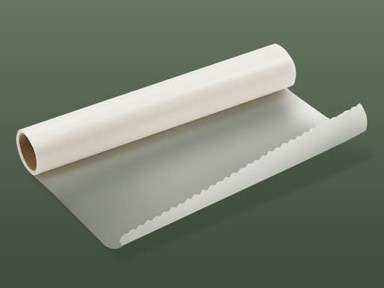
A candlemaker who lived in New York City in the 1890's is said to have been the first person to make wax paper. He frequently stopped at a market on his way home from work to buy fresh fish— wrapped, of course, in ordinary paper. Long before his horsecar reached home, his package of fish would be soggy and smelly, and the other passengers would be thoroughly annoyed. One day he took wrapping paper to work and dipped it into liquid candlewax. After work that day he wrapped his fish in the waxed paper. There was no sogginess or odor from the package, and no one was annoyed by sitting next to a dead fish.
Who invented the stethoscope in 1816?
René Laënnec (1781-1826), a French physician, invented the stethoscope in 1816. Doctors use this instrument to listen to the sounds of the heart and other organs. Laënnec investigated diseases of the heart and the lungs, and published his conclusions in A Treatise on Mediate Auscultation (1819). He died from tuberculosis, a disease on which he had become an expert. Laënnec was born in Quimper, France, and studied with Jean Nicolas Corvisart, Napoleon's favorite physician.
Robert Fulton (1765-1815)
It was the 17th of August, 1807. A crowd stood along the banks of the Hudson waiting for a boat to start up the river. The boat was the "Clermont." It had a steam engine instead of sails to make it go. Robert Fulton had planned it and had it built. No one expected it to work. Fulton heard such mocking shouts as "Bring us back a chip of the North Pole." To the crowd's surprise, the boat kept right on its way. Hats began to sail into the air and there were many cheers. The steamboat was a success.
Fulton was born in Pennsylvania. As a boy he was interested in drawing. By the time he was 21, he was making a living by painting portraits. Then he decided to go to England to study with the famous painter Benjamin West.
Through West he met many interesting people. Some of them were interested in boats. Fulton became interested, too. At first he was most interested in submarines. Later he became interested in steamboats. He built one and tried it out near Paris. It was a failure. He built another and tried it out. This one was not a success either.
Fulton then went back to America and built the "Clermont." Because it was the first really successful steamboat, Fulton is generally called the inventor of the steamboat.
Robert Fulton
Robert Fulton (1765-1815) was an American inventor and successful demonstrator of steam navigation, born in Lancaster Co., Pennsylvania. Early in life he showed some talent for painting, and he went to England to study under Benjamin West. In England, however, he became acquainted with the Duke of Bridgewater, the founder of the canal system of Great Britain, and was persuaded to abandon art and to study mechanical science. This nobleman was at the time engaged in a scheme of steam navigation, which he imparted to Fulton.
Fulton also met James Watt, who had just succeeded in greatly improving the steam engine, and Fulton made himself thoroughly familiar with that engine during his stay, About this time he invented a machine for spinning flax and another for making ropes.
Elisha Gray
Elisha Gray, 1835-1901, was an American inventor, born in Barnesville, Ohio, and educated at Oberlin College. Beginning in 1867 he took out some 70 patents for the telegraph, telephone, and other electrical appliances, such as the telautograph. With E. M. Barton, he organized the firm of Gray and Barton from which the Western Electric Company developed. He claimed the invention of the speaking telephone on the score of a caveat containing specifications which was filed a few hours after Alexander Graham Bell had filed a patent (Feb. 14, 1876). The infringement case was finally decided in Bell's favor.
Who was John Fitch?
John Fitch (1743-1798) was an American inventor and metal craftsman, was born on a farm in Hartford Co., Connecticut. Fitch left home at the age of 15 and spent several years as an itinerant laborer. His early business ventures, which included the management of a brass-smith shop in East Windsor, Conn., and a silversmith shop in Trenton, N.J., were not successful. During the Revolutionary War he served in the
Continental army for a short time. Before the war was over. he quit the army to manage an arms factory in Trenton and then became involved in land speculation in the Northwest Territory.
During the final 13 years of his life Fitch was interested in the invention and development of the steamboat. Fitch's first steamboat was launched on the Delaware River near Philadelphia on Aug. 22, 1787. Two additional steamboats were soon constructed. However, when a fourth vessel was destroyed by a storm in 1791, Fitch's backers withdrew their financial support, even though both a United States and a French patent had been acquired. Unable to make a commercial success of the steamboat, Fitch retired to his land claims near Bardstown, Ky., in 1796.
Continental army for a short time. Before the war was over. he quit the army to manage an arms factory in Trenton and then became involved in land speculation in the Northwest Territory.
During the final 13 years of his life Fitch was interested in the invention and development of the steamboat. Fitch's first steamboat was launched on the Delaware River near Philadelphia on Aug. 22, 1787. Two additional steamboats were soon constructed. However, when a fourth vessel was destroyed by a storm in 1791, Fitch's backers withdrew their financial support, even though both a United States and a French patent had been acquired. Unable to make a commercial success of the steamboat, Fitch retired to his land claims near Bardstown, Ky., in 1796.
Inventions and inventors in the 19th century
The stream of new inventions in the 1800's captured the imagination of people everywhere. An exhibition displaying the marvels of English inventors became one of the great events of the century. It was held in an huge glass pavilion that was built in 1851 in a London park.Inventors themselves became heroes. The American Thomas Edison, for example, worked for five straight days and nights to perfect his phonograph. He believed hard work was the key to success, and at the age of 70 he said there would be plenty of time to rest at 100. Perhaps the most sensational invention was the airplane. In 1909 Louis Blériot, the first person to fly across the English Channel, was greeted with a French flag raised over the white cliffs of Dover.
Subscribe to:
Posts (Atom)